


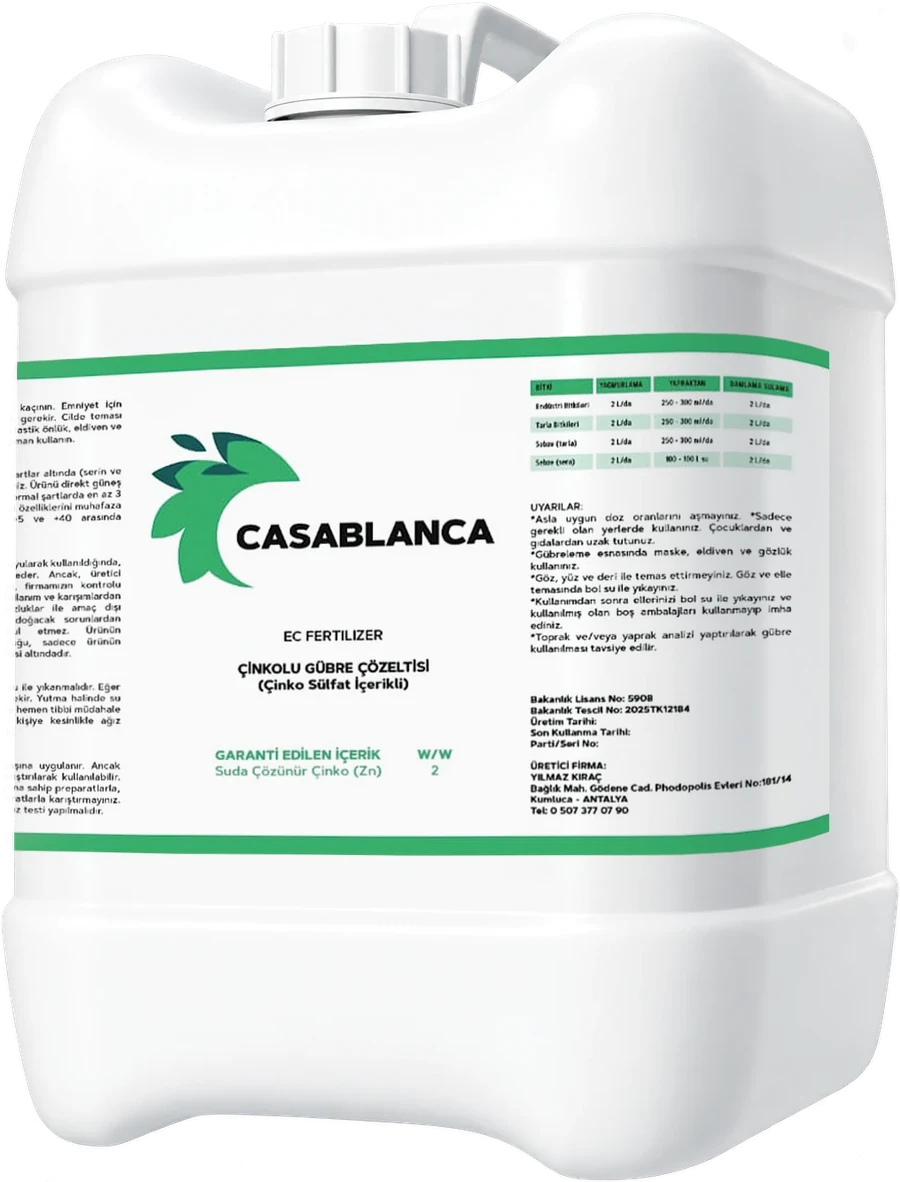
Use by Crop Group
A crop-specific application guide, from greenhouse vegetables to citrus, hazelnut and olive.
Effect on greenhouse and protected vegetables
In greenhouse and protected vegetables (tomato, pepper, aubergine, cucumber, etc.) Casablanca:
- Keeps shoot and leaf development physiologically balanced.
- Maximises uptake of the nutrients the plant needs during its growth period.
- Suppresses stress factors and makes a vigorous, resilient plant form permanent.

Effect on citrus and banana
In orange, mandarin, lemon, grapefruit and banana groups Casablanca:
- Directly strengthens leaf development and cellular structure.
- Secures balanced vegetative growth throughout the season.
- Raises the plant’s natural resistance to stress conditions to its highest level.
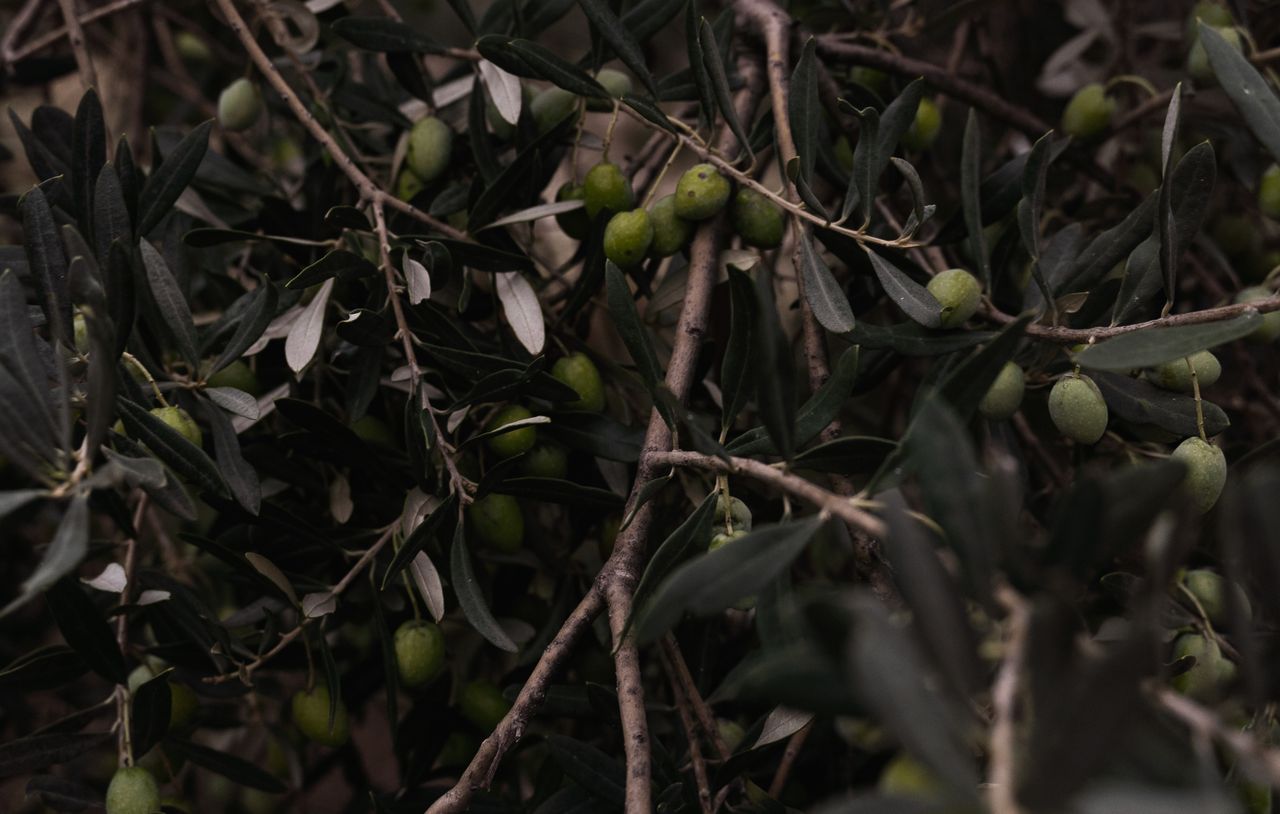
Effect on hazelnut, olive, fig, pistachio and almond
In oil-bearing and hard-shelled species Casablanca:
- Keeps shoots and leaves resilient throughout the whole season.
- Supports uninterrupted growth during climatically sensitive periods.
- Creates a high-yielding production cycle that reaches crop targets.

Effect on strawberry and cut flowers
In strawberry and floriculture Casablanca:
- Increases absorption of the nutrients that accelerate growth momentum.
- Encourages active cellular work in the leaf and fine root zone.
- Delivers a loss-free and far stronger harvest process all season.

Effect on field and winter vegetables
For lettuce, cabbage, spinach, leek and similar groups Casablanca:
- Increases the cellular volume of leaf tissue for a high market-value form.
- Manages steady, loss-free uptake of nutrients from the soil.
- Ensures growth periods continue at an optimum level without stalling.

Effect on vineyards, kiwi and other fruit species
In grape, kiwi, cherry, apple and peach Casablanca:
- Supports cluster and fruit set, balancing size distribution.
- Improves skin quality, contributing to transport and shelf life.
- Keeps the plant standing through frost, sunburn and drought stress.
What Casablanca does for each crop group
| Crop group | Timing | Foliar | Soil (drip) |
|---|---|---|---|
| Greenhouse | First application 3 weeks after planting, then 2–4 applications every 21 days. | 0.8–1 L per 100 L water | 2–3 L / decare |
| Citrus & Banana | 3–4 applications before flowering, at fruit set and during rind development. | 1–1.5 L per 100 L water | 3–4 L / decare |
| Nuts & Olive | Three applications: after bud break, before flowering and after fruit set. | 1–1.5 L per 100 L water | 3 L / decare |
| Strawberry & Flowers | Starts 3 weeks after planting, 2–3 applications every 21 days. | 0.6–0.8 L per 100 L water | 1.5–2 L / decare |
| Field & Winter Vegetables | First application at the 3–4 leaf stage, second 15 days later. | 0.7–0.9 L per 100 L water | 1.5–2.5 L / decare |
| Vine & Kiwi | 3–4 applications at bud break, pre-flowering and berry set. | 1–1.5 L per 100 L water | 3 L / decare |
Exact rates and the number of applications should be confirmed by an agricultural engineer, taking soil and leaf analysis, climate and variety into account.
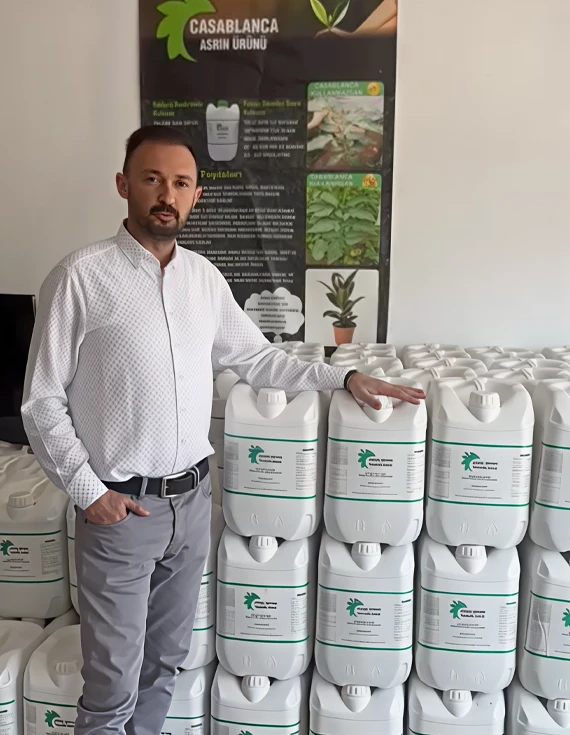
Murat YıldızAgricultural Engineer
Let’s build your application programme together
Our agronomist is with you for dosage, timing and crop-specific programmes. Tell us about your orchard and we will prepare a tailored application calendar.
See the difference in your field this season
Contact us to trial Casablanca on your own crop, find your nearest dealer or receive an application programme.